1
New York Times Summer Reading Contest 纽约时报夏季读写比赛是《纽约时报》从2010年起每年夏天都会举办的竞赛。
2
该竞赛邀请世界各地的中学生一起阅读《纽约时报》文章,发表自己的见解,不仅培养了学生的自我表达能力,还增强了学生读书看报的乐趣,激励他们多留意身边的世界,感受与思考人与生活等关系。
3
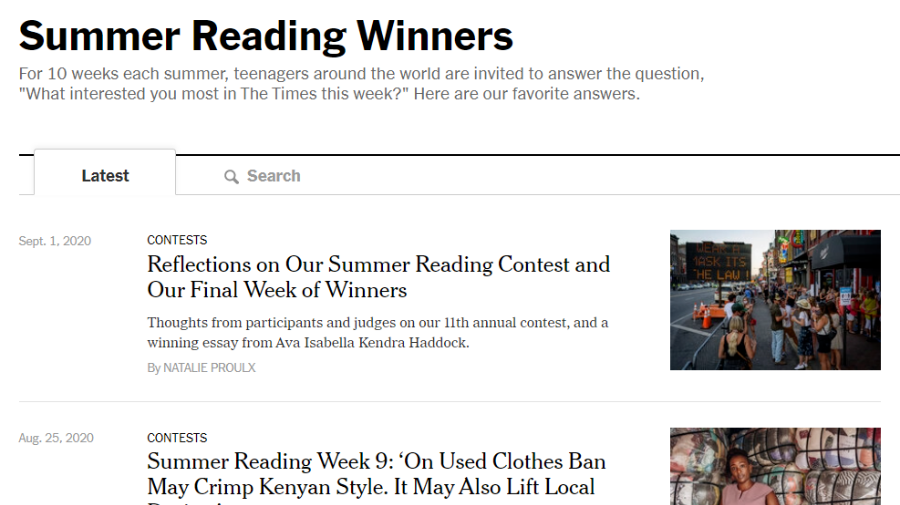
截止至今,全球已有超过8万名的中学生参与到该竞赛中。每一年,优秀学生作品也都会发表在纽约时报官方网站上。
参赛须知
竞赛时间
2022 年 6 月 14 日-8 月 23 日
适合学生
在美国、加拿大或者英国参赛的学生年龄须在 13-19 周岁;
其余全球参赛地区学生年龄须在 16-19 周岁;
美国、英国地区11~12岁以及其他地区11~15岁的学生,须由家长帮助提交。
注意事项
纽约时报的工作人员直系亲属禁止参加此竞赛;
每个学生每周仅限在线上,提交一份答案。
竞赛规则
自竞赛开始(2019年6月14日)每周五,官方都将在网址置顶的位置询问同样的两个问题:
“What interested you most in The Times this week?”译:“ 这周在纽约时报上你最感兴趣的是什么?”
2021年获奖文章
“Why do American grocery stores still have an ethnic aisle?”
It was just another stuffy and sluggish California afternoon when I accompanied my mother — who was pregnant with my little sister at the time — to the grocery store.
“Can you find the Lao Gan Ma?” my mother asked in our native tongue. I studied the aisle directory, but I couldn’t piece together the letters to form words, and therefore it was of no help. After a short while, we agreed to consult a store worker.And that was when we first discovered the Ethnic Aisle.
Priya Krishna writes that Cuong Pham, the owner of a food company, “said the aisle seems to exist more for those looking to find ingredients new to them than for the communities whose cuisines are represented there.” But for people with limited English vocabulary like us, having ethnic foods arranged in one area makes our shopping trips much easier. Without any guidance, people with little exposure to English will find themselves lost as they try to find a sauce or premade appetizer for their meal.
On that sultry summer afternoon, the ethic aisle provided my mother and me with the flavors of our homeland: savory bean paste and sticky rice — identical to before. It became our favorite area in the store. Even now, my family still makes frequent visits to the “ethic aisle” of many grocery stores. As my mom browsed for her favorite oyster sauce, I would drag my little sister with me and point to familiar labels saying excitedly, “I had that when I was little!” and smile at the memory of those Californian supermarkets.
译文
那只是加利福尼亚州又一个闷热而懒散的下午,我陪我的母亲去杂货店。当时母亲怀着我的小妹妹。
“你能找到老干妈吗?”我母亲用我们的母语问道。我研究了货架目录,但我不能把字母拼凑成单词,因此没有帮助。过了一会儿,我们咨询了一位店员。那是我们第一次发现有种族货架。
Priya Krishna写道,一家食品公司的老板Cuong Pham说,“对于那些寻找新食材的人来说,这条通道似乎更适合他们,而不是那些有美食标志的区域。”但对于像我们这样英语词汇有限的人来说,在一个区域安排民族食物,使我们的购物更容易。如果没有任何指导,很少接触英语的人会发现自己迷失了方向,因为他们试图为他们的膳食找到一种酱汁或预先制作的开胃菜。
在那个闷热的夏日午后,走廊为我和母亲提供了我们家乡的风味:美味的豆沙和糯米——和以前一样。它成了我们店里最喜欢的地方。即使是现在,我的家人仍然经常光顾许多杂货店的“种族货架”。当我妈妈浏览她最喜欢的蚝油时,我会把我的小妹妹拖到身边,指着熟悉的标签兴奋地说:“我小时候就吃过了!”并对那些加州超市的记忆微笑。


 1.《纽约时报》官方主办
纽约时报作为美国乃至世界知名的新闻报刊平台,多年来一直坚持举办包括社论、个人叙事、读写、摄影等一系列全球性英文写作竞赛。其举办的比赛具有很高的含金量。如果同学们能在比赛中获得认可,不仅能证明自己的英文写作能力,还可以提升自己的学术、创意写作背景。
2.含金量高
参与NYT不仅可以积累竞赛经验,一旦你的作品脱颖而出,就能在《纽约时报》网站刊登,获得具有含金量的升学筹码,向大学展示人文背景和例证写作能力。
3.不限制专业
NYT并没有专业限制,未来想申请文科/理科都能参加!以文科见长的同学,能靠它体现自己的理工科思维和科学素养;擅长理工科的同学,能靠它打出“差异化”,摆脱刻板印象,让招生官眼前一亮!
4.更多的获奖机会
NYT在投稿方面为参赛者拿奖提供了一定试错机会!即参赛期间任意一周均可投稿,但每人每周只能提交1篇作品。这意味着,如果你第一周没有获奖,可以在第二周继续提交新的作品,竞赛结束前可以持续冲击奖项!对于参赛者而言,这个比赛机制无疑能带来更多的获奖机会!
5.积累文书素材,锻炼写作能力
美国大学的申请文书都需要跟个人经历和思想作联系,是最令人头痛的!参加这项比赛,是大学和夏校申请文书写作很好的热身,不仅能够帮助学生提高读写能力,还能帮助学生更好的理解美国主流报刊的观点、内容和写作方式。是一次难得的积累文书素材的绝佳机会!
1.《纽约时报》官方主办
纽约时报作为美国乃至世界知名的新闻报刊平台,多年来一直坚持举办包括社论、个人叙事、读写、摄影等一系列全球性英文写作竞赛。其举办的比赛具有很高的含金量。如果同学们能在比赛中获得认可,不仅能证明自己的英文写作能力,还可以提升自己的学术、创意写作背景。
2.含金量高
参与NYT不仅可以积累竞赛经验,一旦你的作品脱颖而出,就能在《纽约时报》网站刊登,获得具有含金量的升学筹码,向大学展示人文背景和例证写作能力。
3.不限制专业
NYT并没有专业限制,未来想申请文科/理科都能参加!以文科见长的同学,能靠它体现自己的理工科思维和科学素养;擅长理工科的同学,能靠它打出“差异化”,摆脱刻板印象,让招生官眼前一亮!
4.更多的获奖机会
NYT在投稿方面为参赛者拿奖提供了一定试错机会!即参赛期间任意一周均可投稿,但每人每周只能提交1篇作品。这意味着,如果你第一周没有获奖,可以在第二周继续提交新的作品,竞赛结束前可以持续冲击奖项!对于参赛者而言,这个比赛机制无疑能带来更多的获奖机会!
5.积累文书素材,锻炼写作能力
美国大学的申请文书都需要跟个人经历和思想作联系,是最令人头痛的!参加这项比赛,是大学和夏校申请文书写作很好的热身,不仅能够帮助学生提高读写能力,还能帮助学生更好的理解美国主流报刊的观点、内容和写作方式。是一次难得的积累文书素材的绝佳机会!
 1
New York Times Summer Reading Contest 纽约时报夏季读写比赛是《纽约时报》从2010年起每年夏天都会举办的竞赛。
2
该竞赛邀请世界各地的中学生一起阅读《纽约时报》文章,发表自己的见解,不仅培养了学生的自我表达能力,还增强了学生读书看报的乐趣,激励他们多留意身边的世界,感受与思考人与生活等关系。
3
截止至今,全球已有超过8万名的中学生参与到该竞赛中。每一年,优秀学生作品也都会发表在纽约时报官方网站上。
1
New York Times Summer Reading Contest 纽约时报夏季读写比赛是《纽约时报》从2010年起每年夏天都会举办的竞赛。
2
该竞赛邀请世界各地的中学生一起阅读《纽约时报》文章,发表自己的见解,不仅培养了学生的自我表达能力,还增强了学生读书看报的乐趣,激励他们多留意身边的世界,感受与思考人与生活等关系。
3
截止至今,全球已有超过8万名的中学生参与到该竞赛中。每一年,优秀学生作品也都会发表在纽约时报官方网站上。
 竞赛时间
竞赛时间
 2021年获奖文章
“Why do American grocery stores still have an ethnic aisle?”
It was just another stuffy and sluggish California afternoon when I accompanied my mother — who was pregnant with my little sister at the time — to the grocery store.
“Can you find the Lao Gan Ma?” my mother asked in our native tongue. I studied the aisle directory, but I couldn’t piece together the letters to form words, and therefore it was of no help. After a short while, we agreed to consult a store worker.And that was when we first discovered the Ethnic Aisle.
Priya Krishna writes that Cuong Pham, the owner of a food company, “said the aisle seems to exist more for those looking to find ingredients new to them than for the communities whose cuisines are represented there.” But for people with limited English vocabulary like us, having ethnic foods arranged in one area makes our shopping trips much easier. Without any guidance, people with little exposure to English will find themselves lost as they try to find a sauce or premade appetizer for their meal.
On that sultry summer afternoon, the ethic aisle provided my mother and me with the flavors of our homeland: savory bean paste and sticky rice — identical to before. It became our favorite area in the store. Even now, my family still makes frequent visits to the “ethic aisle” of many grocery stores. As my mom browsed for her favorite oyster sauce, I would drag my little sister with me and point to familiar labels saying excitedly, “I had that when I was little!” and smile at the memory of those Californian supermarkets.
译文
那只是加利福尼亚州又一个闷热而懒散的下午,我陪我的母亲去杂货店。当时母亲怀着我的小妹妹。
“你能找到老干妈吗?”我母亲用我们的母语问道。我研究了货架目录,但我不能把字母拼凑成单词,因此没有帮助。过了一会儿,我们咨询了一位店员。那是我们第一次发现有种族货架。
Priya Krishna写道,一家食品公司的老板Cuong Pham说,“对于那些寻找新食材的人来说,这条通道似乎更适合他们,而不是那些有美食标志的区域。”但对于像我们这样英语词汇有限的人来说,在一个区域安排民族食物,使我们的购物更容易。如果没有任何指导,很少接触英语的人会发现自己迷失了方向,因为他们试图为他们的膳食找到一种酱汁或预先制作的开胃菜。
在那个闷热的夏日午后,走廊为我和母亲提供了我们家乡的风味:美味的豆沙和糯米——和以前一样。它成了我们店里最喜欢的地方。即使是现在,我的家人仍然经常光顾许多杂货店的“种族货架”。当我妈妈浏览她最喜欢的蚝油时,我会把我的小妹妹拖到身边,指着熟悉的标签兴奋地说:“我小时候就吃过了!”并对那些加州超市的记忆微笑。
2021年获奖文章
“Why do American grocery stores still have an ethnic aisle?”
It was just another stuffy and sluggish California afternoon when I accompanied my mother — who was pregnant with my little sister at the time — to the grocery store.
“Can you find the Lao Gan Ma?” my mother asked in our native tongue. I studied the aisle directory, but I couldn’t piece together the letters to form words, and therefore it was of no help. After a short while, we agreed to consult a store worker.And that was when we first discovered the Ethnic Aisle.
Priya Krishna writes that Cuong Pham, the owner of a food company, “said the aisle seems to exist more for those looking to find ingredients new to them than for the communities whose cuisines are represented there.” But for people with limited English vocabulary like us, having ethnic foods arranged in one area makes our shopping trips much easier. Without any guidance, people with little exposure to English will find themselves lost as they try to find a sauce or premade appetizer for their meal.
On that sultry summer afternoon, the ethic aisle provided my mother and me with the flavors of our homeland: savory bean paste and sticky rice — identical to before. It became our favorite area in the store. Even now, my family still makes frequent visits to the “ethic aisle” of many grocery stores. As my mom browsed for her favorite oyster sauce, I would drag my little sister with me and point to familiar labels saying excitedly, “I had that when I was little!” and smile at the memory of those Californian supermarkets.
译文
那只是加利福尼亚州又一个闷热而懒散的下午,我陪我的母亲去杂货店。当时母亲怀着我的小妹妹。
“你能找到老干妈吗?”我母亲用我们的母语问道。我研究了货架目录,但我不能把字母拼凑成单词,因此没有帮助。过了一会儿,我们咨询了一位店员。那是我们第一次发现有种族货架。
Priya Krishna写道,一家食品公司的老板Cuong Pham说,“对于那些寻找新食材的人来说,这条通道似乎更适合他们,而不是那些有美食标志的区域。”但对于像我们这样英语词汇有限的人来说,在一个区域安排民族食物,使我们的购物更容易。如果没有任何指导,很少接触英语的人会发现自己迷失了方向,因为他们试图为他们的膳食找到一种酱汁或预先制作的开胃菜。
在那个闷热的夏日午后,走廊为我和母亲提供了我们家乡的风味:美味的豆沙和糯米——和以前一样。它成了我们店里最喜欢的地方。即使是现在,我的家人仍然经常光顾许多杂货店的“种族货架”。当我妈妈浏览她最喜欢的蚝油时,我会把我的小妹妹拖到身边,指着熟悉的标签兴奋地说:“我小时候就吃过了!”并对那些加州超市的记忆微笑。 




![小学语文易错字音汇总,读错了!请收下[多音字速记表]](/uploads/2025/03/4ffce04d92a4d6cb21c1494cdfcd6dc1-109.jpg )