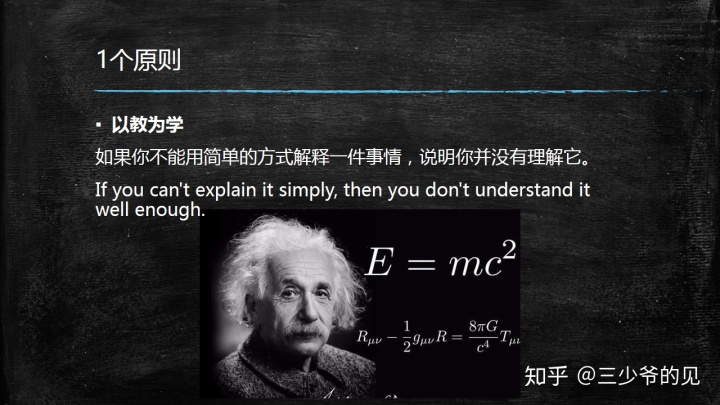
“Any fool can know. The point is to understand.” — Albert Einstein
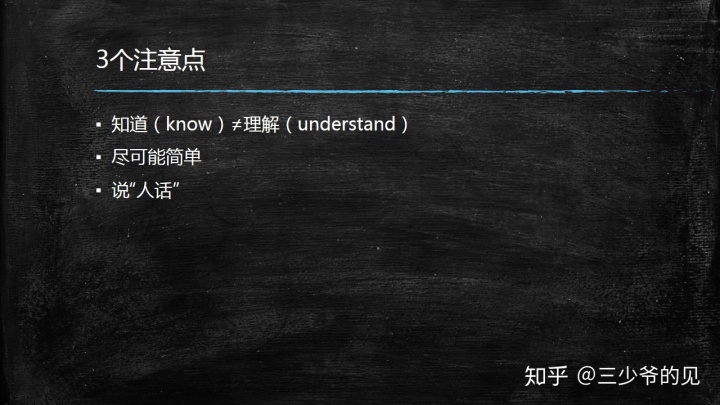
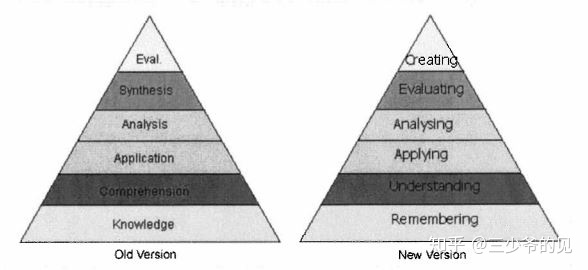
“知道(know)≠理解(understand)”这句话怎么理解?
“You can know the name of that bird in all the languages of the world, but when you’re finished, you’ll know absolutely nothing whatever about the bird. You’ll only know about humans in different places, and what they call the bird… I learned very early the difference between knowing the name of something and knowing something.” — Richard Feynman
“[He] opened a fresh notebook. On the title page he wrote: NOTEBOOK OF THINGS I DON’T KNOW ABOUT. For the first but not last time he reorganized his knowledge. He worked for weeks at disassembling each branch of physics, oiling the parts, and putting them back together, looking all the while for the raw edges and inconsistencies. He tried to find the essential kernels of each subject.”
Any intelligent fool can make things bigger, more complex, and more violent. It takes a touch of genius - and a lot of courage - to move in the opposite direction.
— E.F Schumacher
Feynman's scientific style was always to look for the simplest, most elementary solution to a problem that was possible.
He truly believed that if you couldn't explain something simply, you didn't understand it.
— 来自Leonard Susskind的Ted演讲:https://www.youtube.com/watch?v=6Waurx8e-1o
至此,我们对于费曼技巧有一个相对彻底和简洁的描述,而且希望各位能很好地理解它,如果不是,可以留言给我,大家可以一起来迭代这个过程并获取一个更优的答案。
但是这个过程始终是没有终点的,下一次我们获取到了更多信息,比如看了费曼的书Surely You're Joking, Mr. Feynman! (Adventures of a Curious Character)(Google创始人塞吉·布林强烈推荐)对费曼有了更深入的了解,或者又出现了一个新的学习方法「阿猫阿狗技巧」,那很有可能对费曼技巧又会有更进一步的解读。
另外,我们仍然可以通过认知心理、神经网络的学习,对学习对应的脑部活动有更低层级的认知,那么我们就可以以更通俗的语言来描述费曼技巧。
毕竟爱因斯坦的E=mc²公式也不是第一天就想出来的。
作者:三少爷的见
来源:知乎